

QA, without the outsourcing desk.
One named IntraQA engineer plans the coverage, writes the suite in your workspace, checks every result, files the bugs, and holds the release. The whole QA function. No new hire.
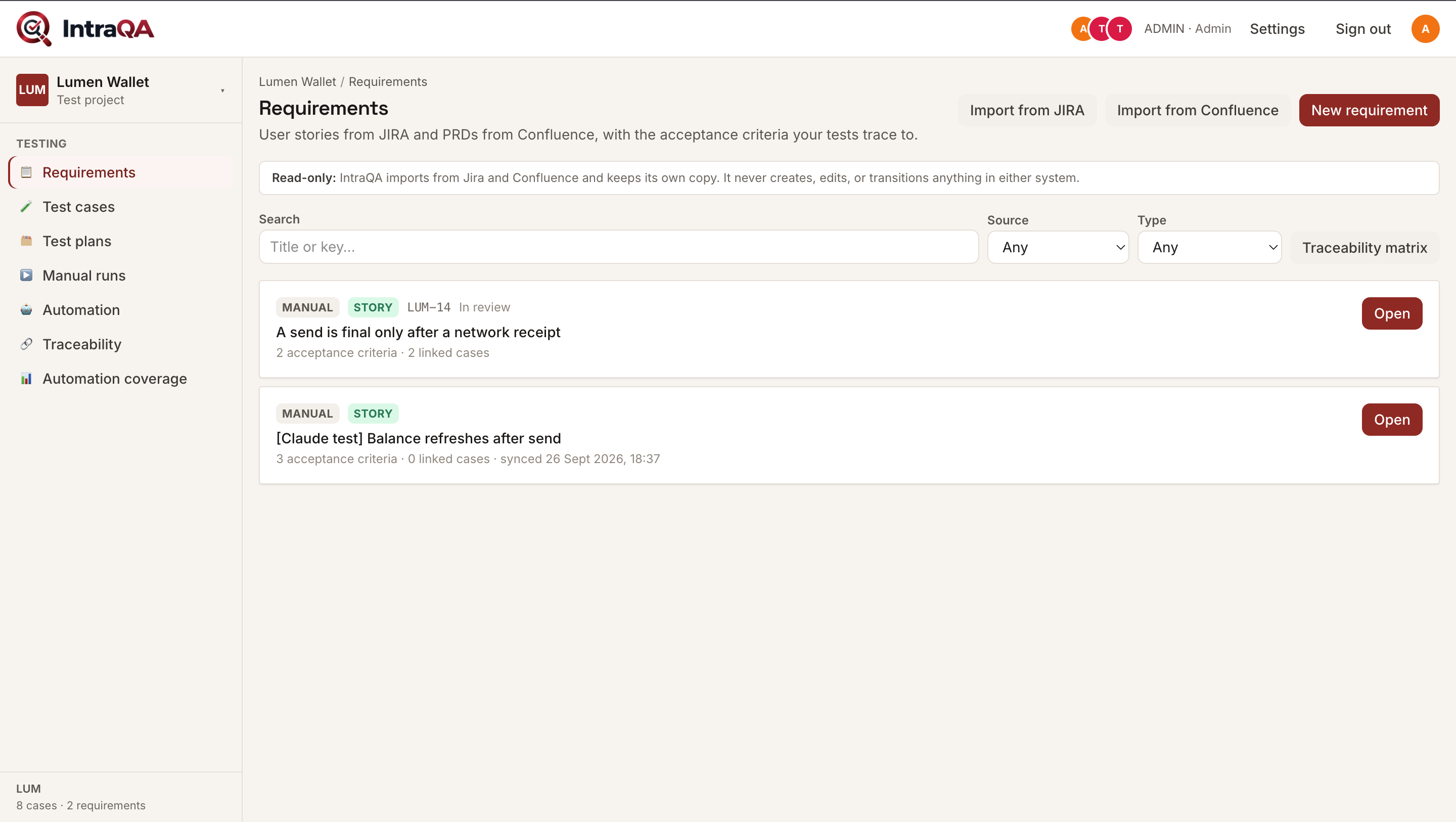
What the engagement covers.
You are buying the outcome of the release, not a pile of hours. The product is where that work is kept.
Test planning
We map the product and agree what has to be covered. You do not have to write the plan before we start.
Cases and plans
Cases, steps, and plans live in IntraQA. Critical flows go in first. The rest of the suite follows.
Runs
Smoke on the change in front of you, fuller regression on a schedule. Every failed run keeps its result.
Maintenance
When the product changes, the suite is updated with it. A person checks that a passing case still tests the thing it claims to.
Triage
A failure is either a bug or noise. Real bugs are filed with the steps to reproduce them.
Release gating
The release waits on the checks that matter. You get a clear read on coverage, pass rate, and what is blocking.
The loop, every release.
- 01
Plan
An IntraQA engineer learns the product and writes the coverage map with you.
- 02
Author
Cases and plans are written into test management, starting with the flows that would hurt if they broke.
- 03
Run
The suite runs against the build you are about to ship, not against a slide from last quarter.
- 04
Review
An engineer reads the failures, files the real bugs, and throws out the false alarms.
- 05
Gate
You ship when the critical checks are green. The record of that decision stays in the product.
One workspace for the suite.
IntraQA test management is the product your team and our engineers share. Cases do not live in a doc that goes stale the week after kickoff.
Open app.intraqa.com- Projects, with a key and a name your team already uses.
- Cases with steps, expected results, and the requirement they prove.
- Plans that group the cases for a release.
- Runs that record what passed, what failed, and who looked.
- Coverage you can show an auditor without rebuilding the story.
Who it is for.
Founders
You need QA before you can hire a team for it. Coverage starts on the flows that take money or trust.
Engineering managers
The suite sits in your release, not in a side channel. Failures come back as bugs, not as a spreadsheet.
QA leads
Your people stop retyping the same cases. Plans, runs, and requirements stay attached to the work.
Questions.
What is in the product?
Projects, test cases, plans, runs, requirements, and the files you attach. The first account on a workspace is the admin. Leads and testers come after that.
Is this only a tool?
No. You can run it yourself, or an IntraQA engineer can own the planning, the cases, and the review. The work still lives in the same place.
Do we have to staff a QA team first?
No. Open the product and start, or talk to us and we embed a senior tester in the sprint.
What kinds of products do you cover?
Web, mobile, API, and the flows around them. Security and AI testing sit beside this when the release needs them.
Need the cases written first? Generate them with the AI agent.
Open the workspace.
Start in the product, or tell us what you are shipping and we will put an engineer on it.